3.51
The stranger god is the deity of the 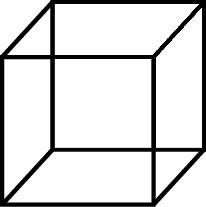 .
.
So why, if there’s no unitary entity underlying appearances, do both of these images—the stranger god and the —seem to have exactly this: a unity at their core?
Well, what is it that the supposed unitary entity represents? Beings as a whole. But more specifically, the fact that beings as a whole appear in vastly different ways. But there’s no ‘beings as a whole’ as an entity or set of entities outside appearance. — This is the paradox, the metaphoric ontology, the giving and gathering, the Being of beings as a whole, to which this account gestures. “So in the awareness of one is always the shadow of the loss of the other.”[1]
The stranger’s hat is a different colour for this bird, that raccoon, that stone.
The stranger god who walks between our fields gathers the fields together, gathers the hat in its many colours, gathers the farmers, this bird, that raccoon, that stone — gathers up their gods, the earth, the sky, gathers it all up in the twinkle of an eye — releases it all with every blink, an image like a speck of crystalline dust.[2] The stranger is a metaphor for ‘It’ which metaphorizes itself, which ‘is’ metaphorizing, itself (§2.51), which prismaticizes, itself (§3.35, §3.47).
And the stranger, who comes from and lives elsewhere, is nonetheless also here, welcomed, always in the heart of things; a hole or opening, balanced in the precipice between disclosures and disclosing.
And yet, the stranger god, who purports to point beyond the prismatic god, is nonetheless a reclaiming by the prismatic god of that which points beyond it.
[1] Zwicky, W&M, LH56, and see §1.6, §2.6, and §3.6.
[2] The Geviert: the fourfold (i.e., earth, sky, mortals, and divinities): Heidegger, “Building Dwelling Thinking,” p. 147–51, 155–6; Heidegger, “The Thing,” in Poetry, Language, Thought, p. 176–7; Heidegger, “Language,” in Poetry, Language, Thought, p. 197.